
Writing content for Google has changed dramatically over the last few years.
A few years ago, ranking a page often meant adding the target keyword several times, building backlinks, and publishing content regularly. While those techniques still play a role, they’re no longer enough on their own.
Today, Google evaluates content differently. It looks for pages that genuinely answer users’ questions, demonstrate expertise, provide a great reading experience, and solve real problems. That’s exactly where SEO website content writing becomes important.
SEO website content writing isn’t about writing for search engines alone. It’s about creating content that is easy for both search engines and people to understand. When your content matches search intent, answers important questions, and provides useful information, it has a much better chance of ranking well and attracting qualified visitors.
Whether you’re a business owner, blogger, marketer, or SEO professional, learning how to create optimized website content can help increase organic traffic, improve search visibility, and generate more leads over time.
What Is SEO Website Content Writing?
SEO website content writing is the process of creating web content that is optimized for search engines while remaining valuable and engaging for real users.
Instead of writing only to include keywords, modern SEO content focuses on delivering accurate information, answering user questions, and providing a positive reading experience.
A well-written SEO page usually combines:
- Keyword research
- Search intent optimization
- Clear content structure
- Helpful information
- Internal linking
- On-page SEO
- User-friendly formatting
- Trustworthy information backed by experience
When all these elements work together, your content becomes easier for Google to understand and more useful for visitors.
Why SEO Website Content Writing Matters More Than Ever
Millions of new pages are published every day. Unfortunately, many of them never receive meaningful organic traffic because they fail to provide real value.
Google’s Helpful Content System rewards pages that demonstrate expertise and genuinely help users rather than simply trying to rank for keywords.
High-quality SEO website content helps businesses:
- Improve organic visibility
- Increase qualified website traffic
- Build authority in their industry
- Generate more leads
- Improve conversion rates
- Create long-term marketing assets
Unlike paid advertising, strong SEO content continues attracting visitors long after it’s published, making it one of the most cost-effective digital marketing strategies.
Creating valuable content is only one part of a successful SEO strategy. Businesses that consistently publish optimized, user-focused articles often see stronger long-term search performance by following proven SEO content writing strategies.
How Google Evaluates SEO Content in 2026
Google has become much better at understanding content quality.
Instead of focusing only on keywords, Google’s algorithms evaluate whether your content satisfies the user’s intent and demonstrates genuine expertise.
Some of the biggest ranking signals include:
Search Intent
Every search has a purpose.
Someone searching for “best SEO tools” expects recommendations.
Someone searching for “how to write SEO content” expects a practical guide.
If your page doesn’t match that intent, ranking becomes much more difficult.
Experience
Google values content created by people with real-world experience.
Sharing practical examples, lessons learned, original screenshots, or real case studies helps build trust.
That’s one reason why many businesses now include actual project results instead of only theoretical advice.
Expertise
Readers expect accurate information backed by knowledge.
High-quality SEO content explains concepts clearly, avoids misleading claims, and demonstrates industry understanding.
Authority
Authority comes from publishing consistent, reliable content over time.
Internal links, external references, case studies, and helpful resources all contribute to stronger topical authority.
Trust
Trust is one of the most important ranking factors.
Content should be accurate, updated regularly, transparent, and written with the user’s best interests in mind.
Instead of trying to manipulate rankings, focus on helping your audience solve problems.
Building trust also requires strong technical optimization. Even the best-written content performs better when supported by the right SEO optimization tools for keyword research, technical audits, and performance monitoring.
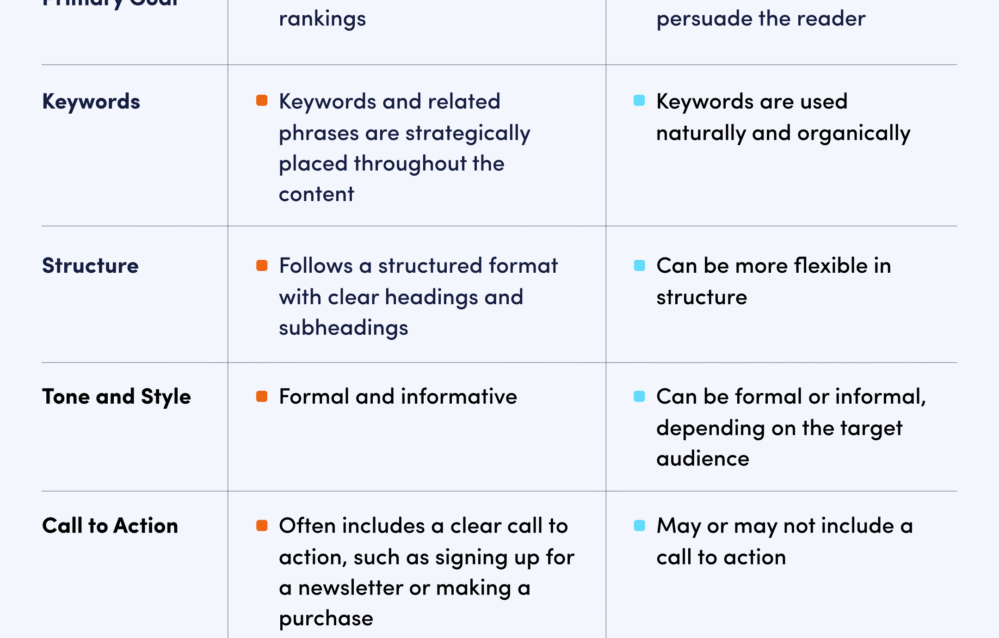
The Difference Between Traditional Content and SEO Website Content
Many people think adding keywords automatically makes content SEO-friendly.
In reality, there’s a significant difference.
Traditional content often focuses only on sharing information.
SEO website content writing focuses on both visibility and usefulness.
A well-optimized page is built around search intent, structured for readability, enriched with relevant keywords naturally, and designed to guide users toward the next step.
That’s why successful SEO content doesn’t simply rank—it also engages readers, answers their questions, and encourages meaningful actions.
| Feature | Traditional Website Content | SEO Website Content Writing |
|---|---|---|
| Primary Goal | Inform readers | Rank on search engines and help users |
| Keyword Research | Usually skipped | Essential before writing |
| Search Intent | Not always considered | Matches user intent |
| Content Structure | Basic formatting | Optimized with H2, H3, FAQs, and internal links |
| On-Page SEO | Limited | Fully optimized |
| User Experience | Average | High priority |
| Long-Term Traffic | Limited | Strong organic growth potential |
| Google Visibility | Lower | Higher when properly optimized |
The comparison above clearly shows that successful SEO website content writing isn’t just about inserting keywords. It’s about creating valuable, well-structured, and user-focused content that satisfies both readers and search engines.
Step-by-Step SEO Website Content Writing Process
Writing SEO-friendly content isn’t about inserting keywords into random paragraphs. It’s a structured process that starts long before the first sentence is written. The best-performing pages usually follow a clear workflow that focuses on user intent, content quality, and search engine optimization together.
Whether you’re writing a blog post, service page, or landing page, following the right process can improve both rankings and user engagement.
Step 1: Understand Your Target Audience
Before researching keywords or writing headlines, understand who you’re writing for.
Ask yourself:
- What problem are they trying to solve?
- What questions are they asking?
- What level of knowledge do they have?
- What information will help them make a decision?
When content answers real questions instead of simply targeting keywords, visitors stay longer, engage more, and are more likely to trust your website.
For example, a beginner searching for SEO website content writing needs practical guidance, while an experienced marketer may be looking for advanced optimization techniques.
Understanding this difference helps you create content that truly matches search intent.
Step 2: Perform Keyword Research
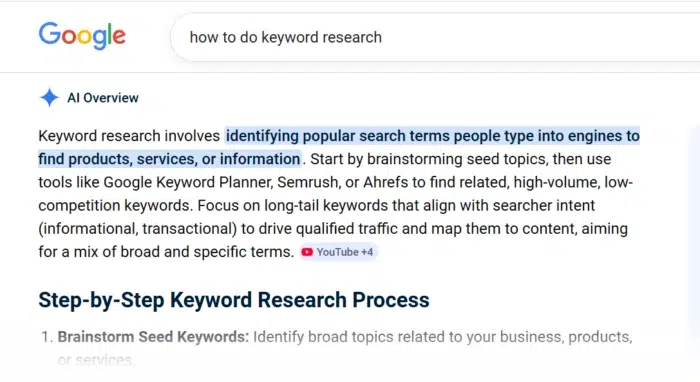
Keyword research remains one of the foundations of SEO website content writing, but modern keyword research goes far beyond finding a high-search-volume phrase.
Today, you should identify:
- Primary keyword
- Secondary keywords
- Long-tail keywords
- Question-based keywords
- Semantic keywords
- Related entities
Instead of repeating the same keyword throughout the article, naturally include related terms that help Google understand the topic more comprehensively.
For example, content around SEO website content writing may naturally include terms such as:
- SEO copywriting
- website content optimization
- SEO content strategy
- content optimization
- search intent
- on-page SEO
- organic traffic
- keyword research
This approach creates topical relevance without keyword stuffing.
Choosing the right keywords becomes much easier when you use reliable AI-powered SEO tools that help identify search trends, keyword opportunities, and content optimization suggestions.
Step 3: Understand Search Intent
Many websites fail because they answer the wrong question.
Google’s goal is to provide users with the most relevant result, not necessarily the page with the highest keyword density.
Before writing, search your target keyword and analyze:
- What type of pages are ranking?
- Are users looking for a guide?
- Do they want a checklist?
- Are they comparing products?
- Do they want tutorials?
If most first-page results are detailed guides, publishing a short 500-word article is unlikely to compete.
Matching search intent should always come before writing.
Step 4: Create a Logical Content Structure
Readers don’t like huge blocks of text.
A well-structured article is easier to scan, easier to understand, and easier for Google to crawl.
A strong SEO article usually contains:
- Clear introduction
- H2 and H3 headings
- Short paragraphs
- Bullet points
- Numbered lists where appropriate
- Relevant examples
- Images
- FAQs
- Helpful conclusion
This improves readability while increasing the chances of appearing in featured snippets.
Step 5: Write Helpful, Original Content
Google doesn’t reward content simply because it’s longer.
It rewards content that genuinely helps users.
Every section should answer a question or solve a problem.
Instead of writing generic statements, include:
- Practical examples
- Personal observations
- Industry insights
- Actionable tips
- Real experiences
- Original explanations
This creates a better reading experience while strengthening your website’s expertise and authority.
One useful technique is explaining why something matters instead of only explaining what it is.
For example, rather than saying “internal links improve SEO,” explain how they help search engines discover related pages, distribute authority, and improve user navigation.
That extra context makes content significantly more valuable.
Step 6: Optimize Content Naturally
Optimization should never interrupt readability.
Instead of forcing the same keyword into every paragraph, place it naturally where it fits.
Focus on optimizing:
- Title
- Introduction
- H2 headings
- Meta title
- Meta description
- Image alt text
- URL
- Internal links
Google understands context much better today, so writing naturally usually performs better than excessive keyword repetition.
Even high-quality articles need regular updates. Reviewing your existing content and applying a structured SEO improvement strategy helps maintain rankings as search trends and Google’s algorithms continue to evolve.
Step 7: Make Content Easy to Read
Most visitors don’t read every word.
They scan the page first.
Improve readability by:
- Writing short paragraphs
- Using descriptive headings
- Highlighting important ideas naturally
- Breaking information into sections
- Avoiding unnecessary jargon
- Keeping sentences clear and conversational
Good formatting improves user experience, reduces bounce rates, and encourages visitors to spend more time on your page—signals that can indirectly support better SEO performance.
Common SEO Website Content Writing Mistakes That Hurt Rankings
Even experienced marketers sometimes make mistakes that prevent good content from reaching its full ranking potential. In many cases, the issue isn’t poor writing—it’s poor optimization.
Avoiding these common mistakes can significantly improve both rankings and user engagement.
Writing Only for Search Engines
One of the biggest mistakes is creating content that focuses entirely on keywords instead of readers.
If every paragraph feels repetitive or stuffed with keywords, visitors will leave quickly.
Instead, write naturally and answer real questions. Search engines have become much better at understanding context, so helpful content almost always performs better than keyword-heavy content.
Ignoring Search Intent
Some articles are well-written but still fail because they don’t satisfy what users are actually searching for.
Before writing, always analyze the first page of Google.
Ask yourself:
- Is Google ranking guides?
- List articles?
- Product comparisons?
- Service pages?
Matching the correct search intent dramatically improves your chances of ranking.
Publishing Thin Content
Short articles with little useful information rarely compete against comprehensive resources.
Rather than publishing several small articles, create one in-depth guide that genuinely answers the topic.
Quality almost always beats quantity.
Forgetting Internal Linking
Internal links help users discover more information while helping search engines understand your website structure.
Relevant internal links also distribute authority across important pages.
Building strong topical authority becomes much easier when related pages are connected through strategic internal linking and supported by real SEO case studies that demonstrate practical optimization results.
Real SEO Website Content Writing Case Study
Theory is useful.
Real results are even better.
One of our recent SEO projects focused on improving organic visibility through better website content, technical SEO improvements, keyword optimization, and consistent content updates.
Instead of publishing large amounts of content, we focused on creating pages that matched search intent, answered user questions, and delivered genuine value.
Along with improved content structure and internal linking, we optimized headings, metadata, images, and page experience.
Over the following months, the website experienced:
- Significant improvement in keyword visibility
- Growth in organic impressions
- Higher search rankings
- Increased website traffic
- Better engagement metrics
- Improved overall SEO performance
These results demonstrate that successful SEO website content writing is never about adding more keywords—it’s about creating content people actually find useful.

How AI Is Supporting Modern SEO Website Content Writing
Artificial intelligence has changed how marketers research topics, organize ideas, and improve productivity.
However, successful SEO content still requires human expertise.
AI can help with:
- Topic research
- Content outlines
- Keyword clustering
- Grammar improvements
- Content optimization
- Workflow automation
But human writers remain responsible for:
- Experience
- Accuracy
- Storytelling
- Brand voice
- Original insights
- Strategic thinking
The most successful content teams combine AI efficiency with human creativity instead of relying entirely on automation. Many content teams also use AI workflow automation to streamline research, content planning, drafting, and optimization while maintaining editorial quality.
Measuring the Success of SEO Website Content
Publishing an article is only the beginning.
To understand whether your content performs well, regularly monitor:
- Organic traffic
- Keyword rankings
- Average engagement time
- Click-through rate (CTR)
- Conversions
- Bounce rate
- Indexed pages
- Featured snippets
Continuous optimization helps maintain rankings as competitors publish new content and Google’s algorithms evolve.
Future of SEO Website Content Writing
SEO content writing continues to evolve rapidly.
Some of the biggest trends shaping the future include:
AI-Assisted Content Workflows
AI will continue improving research and workflow efficiency while human expertise remains essential for quality.
Experience-Based Content
Google increasingly rewards first-hand experience and original insights.
Topic Authority
Publishing comprehensive content around related topics will become even more important.
Search Everywhere Optimization
Content should be optimized not only for Google but also for AI search engines, voice search, and answer engines.
Helpful Content
The websites that consistently solve real problems will continue outperforming content created solely to target keywords.
Final Thoughts
SEO website content writing is much more than adding keywords to a page.
It combines user intent, content quality, technical optimization, internal linking, and real expertise to create pages that both search engines and readers appreciate.
Businesses that consistently publish valuable, well-structured, and experience-driven content are far more likely to build long-term organic visibility than those relying on outdated SEO tactics.
Whether you’re creating blog posts, service pages, or landing pages, always focus on helping users first. Rankings naturally follow when content provides genuine value.
For businesses looking to build sustainable organic growth, investing in high-quality SEO website content writing remains one of the most effective long-term digital marketing strategies. To explore more practical SEO resources, digital marketing guides, and real optimization strategies, visit NS Digi.
FAQ
What is SEO website content writing?
SEO website content writing is the process of creating content that is optimized for search engines while providing valuable information that satisfies user intent and improves organic rankings.
Why is SEO website content writing important?
It helps businesses increase organic traffic, improve search visibility, build authority, and generate qualified leads through high-quality content.
Can AI replace SEO content writers?
No. AI can assist with research, planning, and optimization, but human expertise, creativity, and real-world experience remain essential for producing trustworthy, high-quality SEO content.
How long should SEO content be?
The ideal length depends on search intent and competition. Comprehensive articles that fully answer user questions generally perform better than short, incomplete content.
How often should SEO content be updated?
Review important pages every 6–12 months, or sooner if rankings decline, search intent changes, or new information becomes available.
About the Author

Sumit Rana is a digital marketing professional with over 9 years of experience in SEO, content marketing, AI-assisted workflows, and organic growth strategies. He has helped businesses across multiple industries improve search visibility, increase organic traffic, and build long-term online authority through data-driven SEO and high-quality content strategies.
His expertise includes keyword research, technical SEO, content strategy, local SEO, link building, and AI-powered marketing solutions. Through NS Digi, he shares practical insights, real-world case studies, and proven strategies to help businesses grow online.