
How to know Google ranking of my website is an important question for every business owner, marketer, and website developer who wants to improve online visibility. Checking your Google ranking helps you understand where your website appears in search results, which keywords are performing well, and what SEO improvements can increase organic traffic.
Many businesses publish blogs, create service pages, and invest in SEO but do not regularly track their website rankings. Without knowing your current position on Google, it becomes difficult to understand what is working, which pages need improvement, and where new growth opportunities exist.
Google ranking plays an important role in increasing online visibility. When your website appears higher in search results, you have a better chance of attracting organic traffic, generating leads, and reaching potential customers.
At NS Digi, we focus on data-driven SEO strategies, content optimization, technical SEO, and search visibility improvements to help businesses grow online.
In this guide, we will explain different ways to check your Google ranking, free and paid SEO tools, important ranking factors, and practical strategies to improve your website’s position in search results.
What Is Google Ranking?
Google ranking refers to the position where your webpage appears in Google’s search engine results pages (SERPs) for a specific keyword or search query.
For example:
If a user searches:
“best SEO company”
And your website appears as the third result; your website ranking position is #3 for that keyword.
Your Google ranking can change frequently because search engines consider many factors before showing results, including:
- Content quality
- Search intent
- Website authority
- Backlink profile
- Technical SEO performance
- User experience
- Website speed
- Mobile usability
A website may rank differently for different keywords. One page might rank on the first page for one search term while appearing much lower for another keyword.
This is why regularly monitoring your keyword rankings is important for every website owner and SEO professional.
Why Knowing Your Google Ranking Is Important
Tracking your website ranking helps you understand how your SEO efforts are performing and what actions are required to improve visibility.
1. Understand Your Website Performance
Google ranking data shows how your website performs in organic search results.
By checking your rankings, you can identify:
- Which keywords are bringing impressions
- Which pages are getting visibility
- Which keywords need optimization
- Which content performs better
For example, if your blog is ranking on page two of Google, improving content quality, adding internal links, and optimizing search intent can help move it closer to the first page.
2. Measure SEO Growth
SEO is a continuous process. Rankings improve gradually through consistent optimization and content improvements.
Regular ranking tracking helps you measure:
- Keyword position changes
- Organic traffic growth
- Content performance
- SEO campaign results
It also helps you understand whether your current SEO strategy is delivering positive results or requires adjustments.
3. Find New Keyword Opportunities
Ranking reports often reveal valuable keywords that your website is already appearing for.
For example:
Your website may rank at position 12 for an important keyword. With better content optimization, improved user experience, and stronger internal linking, you may improve that ranking and receive more organic traffic.
Finding these opportunities allows you to focus your SEO efforts where they can create the biggest impact.
4. Analyze Competitor Performance
Google ranking analysis is not only about tracking your own website. It also helps you understand competitor strategies.
You can analyze:
- Competitor ranking keywords
- Content topics
- Search intent coverage
- Backlink opportunities
This information helps you create better content and develop stronger SEO strategies.
How to Know Google Ranking of My Website: Step-by-Step Methods
There are multiple methods to check your website ranking on Google. Some methods are free and suitable for beginners, while advanced tools provide detailed tracking features for SEO professionals.
Method 1: Manual Google Search
The simplest way to check your Google ranking is by searching your target keyword manually.
Steps to Check Ranking Manually:
- Open Google Search.
- Use an incognito/private browser window.
- Search your target keyword.
- Check where your website appears in the search results.
Example:
Keyword:
“digital marketing agency”
You can check whether your website appears on:
- First page
- Second page
- Beyond the top results
Benefits of Manual Search:
✅ Free method
✅ Quick way to check individual keywords
✅ Easy for beginners
Limitations:
❌ Results can vary based on location
❌ Search history can influence results
❌ Not practical for tracking hundreds of keywords
For accurate SEO monitoring, professionals usually use dedicated ranking tools.
Method 2: Google Search Console
Using Google Search Console is one of the easiest ways to know Google ranking of my website because it provides real search performance data.
It helps website owners analyze:
- Search queries
- Website clicks
- Impressions
- Click-through rate (CTR)
- Average ranking position
- Top-performing pages
Steps to Check Ranking Using Google Search Console:
Step 1:
Login to your Google Search Console account.
Step 2:
Select your verified website property.
Step 3:
Open:
Performance → Search Results
Step 4:
Analyze important metrics:
- Queries
- Pages
- Countries
- Devices
- Average Position
For example, if a keyword receives many impressions but fewer clicks, improving your page title and meta description can help increase CTR.
Google Search Console is especially useful because it shows real search data from users who find your website through Google.
Method 3: Use SEO Ranking Tools
SEO tools help marketers track multiple keywords, analyze competitors, and monitor ranking changes automatically.
These tools provide insights about:
- Keyword positions
- Ranking improvements
- Traffic estimates
- Competitor rankings
- SERP features
SEMrush
SEMrush is a popular SEO platform used for keyword tracking and competitor research.
It helps with:
- Position tracking
- Keyword analysis
- Competitor comparison
- SEO reporting
Ahrefs
Ahrefs is widely used for SEO analysis and provides detailed insights into:
- Keyword rankings
- Backlink opportunities
- Competitor research
- Organic search performance
Moz Pro
Moz Pro offers SEO features including:
- Rank tracking
- Keyword research
- Website analysis
- SEO recommendations
Ubersuggest
Ubersuggest is useful for beginners who want to monitor:
- Keyword rankings
- Traffic estimates
- SEO opportunities
- Competitor keywords
To understand more about different ranking analysis methods and how your website appears in Google search results, you can read our detailed guide on check website ranking in Google Search.
Method 4: Rank Tracking Software
Dedicated rank tracking software helps businesses monitor keyword movements automatically.
Popular rank tracking tools include:
- SERPWatcher
- AccuRanker
- ProRankTracker
These tools allow you to:
- Track daily keyword positions
- Monitor ranking changes
- Identify sudden ranking drops
- Generate SEO reports
For SEO agencies and businesses managing multiple websites, automated rank tracking saves time and provides valuable performance insights.
How to Improve Google Ranking of Your Website in 2026
Checking your Google ranking is only the first step. The real goal of tracking rankings is to identify opportunities and improve your website performance.
Google uses hundreds of ranking factors to determine which pages appear at the top of search results. A successful SEO strategy focuses on creating helpful content, improving technical performance, building authority, and providing a better user experience.
Below are some proven strategies to improve your website rankings.
1. Optimize Your On-Page SEO
On-page SEO helps Google understand your content and match it with relevant search queries.
Important on-page SEO elements include:
- SEO-friendly title tags
- Meta descriptions
- Proper heading structure
- Keyword optimization
- Internal linking
- Image optimization
- Clean URL structure
Your content should naturally include relevant keywords without keyword stuffing. Focus on answering user questions and providing valuable information.
For a detailed guide on improving your website visibility and rankings, explore our SEO improvement guide on improve SEO performance and rankings.
2. Create High-Quality and Helpful Content
Content remains one of the most important factors for SEO success.
Google prioritizes content that provides real value to users.
High-quality content should:
- Solve user problems
- Match search intent
- Include accurate information
- Provide practical examples
- Be updated regularly
Instead of creating content only for search engines, focus on creating resources that genuinely help your audience.
For example, a website ranking guide should not only explain ranking tools but also provide actionable steps, examples, and expert insights.
3. Improve Website Speed and Technical SEO
Website performance directly affects user experience.
A slow website can increase bounce rates and negatively impact conversions.
Important technical SEO improvements include:
- Improving page loading speed
- Fixing broken links
- Optimizing images
- Creating XML sitemap
- Maintaining robots.txt
- Implementing structured data
- Improving Core Web Vitals
A technically optimized website helps search engines crawl and understand your content more effectively.
4. Build Quality Backlinks
Backlinks are links from other websites pointing to your website.
High-quality backlinks from trusted websites can improve your website authority and search visibility.
Effective backlink strategies include:
- Publishing valuable content
- Digital PR
- Guest contributions
- Industry partnerships
- Creating shareable resources
However, quality is more important than quantity. A few relevant backlinks from authoritative websites are more valuable than many low-quality links.
5. Improve User Experience (UX)
Google focuses heavily on user experience because its goal is to provide the best search results.
Important UX factors include:
- Mobile-friendly design
- Easy navigation
- Clear content structure
- Fast loading pages
- Engaging visuals
When users find your content useful and stay longer on your website, it can send positive quality signals.
6. Update Existing Content Regularly
Old content may lose rankings over time because competitors publish newer and more detailed information.
Content updates can include:
- Adding new statistics
- Updating outdated information
- Improving examples
- Adding new sections
- Optimizing keywords
Refreshing existing content is often faster and more effective than creating completely new pages.
How AI Is Changing Google Rankings in 2026
Search is changing rapidly with the growth of artificial intelligence.
Google and other AI-powered search platforms are changing how users discover information.
Modern SEO now includes:
- Helpful content optimization
- Entity-based SEO
- AI search visibility
- Brand authority
- Expert-driven content
Businesses need to focus on creating trustworthy content that can appear not only in traditional search results but also in AI-generated answers.
AI tools can help marketers with:
- Keyword research
- Content analysis
- SEO audits
- Competitor research
- Content optimization
You can explore modern solutions and AI-powered platforms through AI tools for SEO.
Using AI Tools to Improve SEO Workflow
AI can make SEO processes faster and more efficient when used correctly.
SEO professionals use AI for:
- Finding keyword opportunities
- Creating content outlines
- Analyzing search intent
- Improving content quality
- Automating repetitive tasks
Platforms like Make AI Now provide access to multiple AI solutions that help users improve productivity, content creation, and digital workflows.
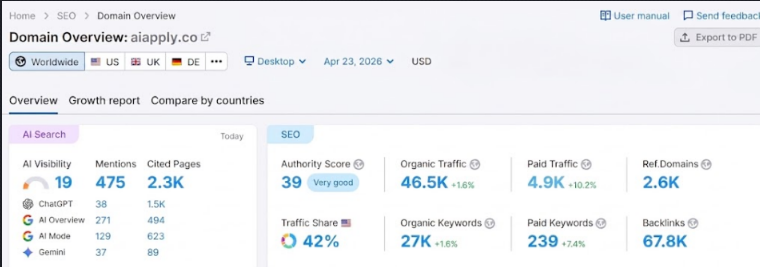
Real SEO Case Study: Improving Organic Visibility Through Data-Driven SEO
Tracking rankings becomes more valuable when businesses use the data to make strategic improvements.
Challenge
A website was receiving Google impressions but was not getting enough clicks and conversions.
Many important keywords were ranking on lower positions, which limited organic growth.
SEO Analysis
The website performance was analyzed using:
- Google Search Console data
- Keyword ranking reports
- Competitor research
- Content analysis
- Technical SEO checks
The analysis identified:
- Keywords ranking on page two
- Pages with high impressions but low CTR
- Content gaps compared with competitors
- Opportunities for internal linking improvements
Strategy Implemented
The following SEO improvements were applied:
Content Optimization
Existing pages were updated according to search intent.
Changes included:
- Improving content structure
- Adding helpful sections
- Updating outdated information
- Optimizing headings
Internal Linking Improvements
Relevant pages were connected to improve website navigation and distribute SEO authority.
Technical SEO Improvements
Technical issues affecting performance were identified and optimized.
Keyword Strategy
New keyword opportunities were targeted based on search demand and ranking potential.
Results
After implementing these improvements:
- Organic visibility increased
- More keywords started appearing in search results
- Existing pages improved their ranking positions
- Website performance became easier to monitor
Key Learning
SEO success comes from continuous tracking, analysis, and improvement. Ranking data helps businesses understand where opportunities exist and what actions can create better results.
Common Mistakes While Checking Google Rankings
1. Checking Only One Keyword
Many businesses focus on a single keyword and ignore overall search visibility.
A strong SEO strategy tracks multiple relevant keywords.
2. Depending Only on Manual Searches
Manual searches can provide inaccurate results because rankings change based on:
- Location
- Device
- Search history
Professional SEO tools provide more reliable tracking.
3. Ignoring Search Intent
Ranking for the wrong keyword does not always bring valuable traffic.
Always focus on keywords that match your audience’s needs.
4. Not Updating Old Content
Outdated content can lose rankings over time.
Regular content updates help maintain visibility.
Frequently Asked Questions (FAQs)
How to Know Google Ranking of My Website for Free?
You can check your website ranking for free using Google Search Console. It provides keyword positions, impressions, clicks, and performance data directly from Google.
What is the best tool to check Google rankings?
Google Search Console is best for free tracking, while tools like SEMrush, Ahrefs, and Moz Pro provide advanced keyword tracking and competitor analysis.
How to know Google ranking of my website for free?
Regularly checking how to know Google ranking of my website helps businesses improve their SEO strategy and increase organic visibility.
Why is my website not ranking on Google?
Common reasons include:
- Poor keyword targeting
- Low-quality content
- Technical SEO problems
- Lack of backlinks
- Poor user experience
How long does it take to improve Google rankings?
SEO results depend on factors like competition, website authority, content quality, and technical improvements. Some changes may show results within weeks, while competitive keywords may take several months.
About the Author
Sumit Rana – SEO Expert & Founder of NS Digi
Sumit Rana is an SEO expert and the founder of NS Digi, with 9+ years of experience in SEO, content marketing, and digital growth strategies.
He helps businesses improve their online visibility through technical SEO, keyword research, content optimization, competitor analysis, and data-driven SEO campaigns.
Through real SEO projects and continuous search analysis, Sumit focuses on improving organic rankings, increasing qualified traffic, and building sustainable online growth.

Conclusion: Track, Analyze, and Improve Your Google Rankings
Knowing how to check your Google ranking is an important part of building a successful SEO strategy. Ranking data helps you understand your website performance, identify opportunities, and make informed decisions to improve visibility. By using tools like Google Search Console, SEMrush, Ahrefs, and AI-powered SEO solutions, businesses can monitor rankings and continuously optimize their websites. Remember, SEO is not a one-time activity. It requires regular tracking, content improvements, technical optimization, and a focus on user experience. A website that consistently provides valuable content and follows modern SEO practices has a better chance of achieving long-term growth in Google search results. Regularly checking how to know Google ranking of my website helps businesses improve their SEO strategy and increase organic visibility.