

If you have ever searched for your own website on Google and struggled to find it, you are not alone. Many website owners and marketers face the same issue — not knowing where their site actually ranks or how to improve its position. Understanding how to check your website’s ranking on Google is the first step toward improving visibility, attracting the right audience, and growing your online presence.
If you are offering digital marketing services, understanding your website’s ranking is essential to attract the right audience and grow online.
This guide will walk you through everything you need to know about website ranking — from why it matters, how to track it, which tools to use, and practical strategies that actually work.
Why is it Important to Check Website Ranking in Google Search?
Your website SEO ranking is directly linked to how much organic traffic you receive. Studies show that the top 3 positions in Google SERPs get over 60% of total clicks, while websites on the second page receive very little traffic.
If you don’t regularly monitor your rankings, you risk:
- Losing out to competitors who optimize better
- Targeting the wrong keywords
- Missing high-intent customers
- Wasting effort on strategies that don’t work
By tracking your keyword positions, you can clearly see which pages are performing well and where improvements are needed.
What Affects Google Website Ranking?
Before learning how to track your rankings, it’s important to understand what actually impacts your position:
1. Relevant Keywords
Choosing the right keywords based on search intent is essential for ranking.
2. Quality Content
Google prioritizes helpful, well-structured, and informative content that genuinely solves user problems.
3. Backlinks
Links from trusted websites increase your authority and improve rankings.
4. User Experience (UX)
A fast, mobile-friendly, and easy-to-use website performs better in search results.
5. On-Page SEO
Optimizing titles, meta descriptions, and internal links plays a major role.
6. Technical SEO
Website speed, HTTPS security, and proper indexing are key factors.
How to Check Website Ranking in Google Search Manually
If you don’t want to use tools, you can manually check your rankings:
- Open an incognito window
- Search your target keyword
- Look for your website in results
However, this method isn’t fully accurate due to location and personalization differences.
If you want a more detailed breakdown, you can also read our guide on how to know Google ranking of my website, where we explain additional methods and tools in depth.
Best Tools to Check Website Ranking in Google Search
There are many tools available, but choosing the right one depends on your needs.
- Google Search Console – Best free tool for tracking performance
- SEMrush / Ahrefs – Advanced tools for deep analysis and competitor tracking
- Ubersuggest – Beginner-friendly and easy to use
- Moz Pro – Good for domain authority and keyword tracking
- SERPWatcher – Simple and clean interface
- SEO PowerSuite – Detailed reports and tracking
In my experience, Google Search Console gives the most reliable starting point for understanding how your website performs in search results.
Step-by-Step Guide: How to Check Website SEO Ranking in Google
Follow these steps:
Identify Keywords
List your main and long-tail keywords.
Use Google Search Console
Check impressions, clicks, and average position.
Use a Rank Tracking Tool
Tools like SEMrush or Ahrefs give more accurate data.
Analyze Competitors
See what’s working for others in your niche.
Track Progress
Monitor changes regularly and adjust your strategy.
How to Improve Website Ranking on Google
Knowing your rankings is just the beginning. To grow traffic, you need to take action.
If you are serious about growth, it is important to focus on proven strategies to improve website ranking on Google including content optimization, technical SEO, and link building.
1. Optimize On-Page SEO
Use keywords naturally in titles and headings.
2. Create High-Quality Content
Focus on solving real problems with valuable content.
3. Build Backlinks
Get links from relevant and trusted websites.
4. Improve Technical SEO
Fix errors, improve speed, and ensure proper indexing.
5. Mobile Optimization
Make your site responsive and mobile-friendly.
6. Update Old Content
Refresh outdated posts with new data and keywords.
7. Track Performance
Regularly monitor keyword positions and traffic.
Local SEO: Ranking for Specific Locations
If you run a local business, tracking rankings in specific locations is important. Optimizing for local searches, maintaining consistent business details, and collecting reviews can significantly improve visibility.
Common Mistakes to Avoid
- Checking rankings without clearing cache
- Ignoring long-tail keywords
- Relying only on manual checks
- Not considering mobile/local results
- Focusing only on rankings instead of conversions
Case Study: Real Ranking Growth in 2 Months
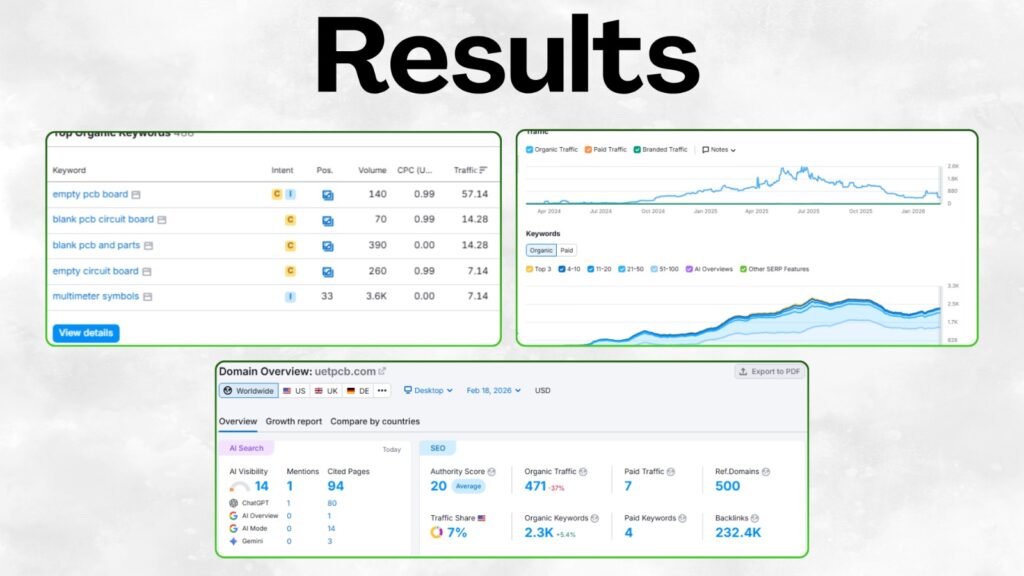
A small business website we worked with was not ranking within the first few pages of Google for its main keywords. After improving content quality, fixing on-page SEO, and tracking keyword positions regularly using Google Search Console, we started seeing steady improvement. Within around 60 days, several keywords reached the first page, and organic traffic increased significantly. This shows how consistent tracking and small improvements can lead to real growth.
Frequently Asked Questions
How often should I check my website ranking?
You should check your rankings at least once a week to track performance.
Is Google ranking the same for everyone?
No, it varies based on location, device, and search history.
What is the best free tool to check rankings?
Google Search Console is the most reliable free option.
Can I check rankings without tools?
Yes, but results may not be accurate due to personalization.
Future of Google Search Rankings
Google’s algorithms evolve constantly. In the future AI-driven search results, voice search optimization, and user experience signals will play an even bigger role in rankings.
To stay ahead, businesses must focus on holistic SEO strategies — not just keyword rankings.
Final Thoughts
Understanding how your website performs in search results is the foundation of a strong SEO strategy. By tracking your rankings, using the right tools, and consistently improving your website, you can increase visibility and attract more traffic.
SEO is a long-term process, but with the right approach, the results are worth it.
You can also explore our SEO blog to learn more strategies and stay updated with the latest trends.
About the Author
Sumit Rana is a digital marketing expert with 9+ years of experience in SEO, content marketing, and online business growth. He has worked with multiple clients across different industries, helping them improve their Google rankings, increase organic traffic, and build a strong online presence.
His expertise includes keyword research, technical SEO, content strategy, and performance tracking. He offers complete digital marketing services and focuses on data-driven strategies and continuous optimization to deliver long-term, sustainable results.