
Search engine optimization is often discussed through theories, best practices, and ranking factors. However, the most valuable SEO lessons come from real-world implementation. That is why SEO case studies are so important.
Instead of relying on assumptions, SEO case studies show actual strategies, challenges, and measurable outcomes. They help businesses understand what works, what doesn’t, and how search visibility can improve through consistent optimization.
Whether you are a business owner, marketer, agency, or blogger, studying real SEO case studies can provide actionable insights that are difficult to learn from generic SEO guides.
Over the years, I have worked on projects across multiple industries, including AI, fitness, and content-focused websites. The examples below highlight some of the strategies implemented and the results achieved through technical SEO, content optimization, internal linking, authority building, and user-focused improvements.
If you are interested in seeing a more detailed breakdown of one campaign, you can also explore this real SEO case study
Why SEO Case Studies Matter
Google’s search algorithms continue to evolve. Ranking well today requires far more than simply inserting keywords into content.
Successful SEO campaigns typically involve:
- Understanding search intent
- Creating high-quality content
- Improving technical website performance
- Building topical authority
- Earning relevant backlinks
- Enhancing user experience
SEO case studies help businesses learn from real examples rather than relying on outdated tactics.
Some of the biggest benefits include:
Understanding Proven SEO Strategies
Case studies reveal which techniques contributed to ranking improvements and traffic growth.
Learning From Real Data
Instead of theory, case studies provide measurable outcomes such as:
- Keyword growth
- Organic traffic increases
- Backlink acquisition
- Search visibility improvements
Avoiding Common SEO Mistakes
Many campaigns fail because of poor keyword targeting, weak content, or technical issues. Case studies help identify these problems before they impact performance.
Staying Current With SEO Trends
Modern SEO increasingly incorporates artificial intelligence, automation, user intent analysis, and advanced content strategies.
Many businesses now use AI tools for SEO to improve content planning, keyword research, and optimization workflows.
SEO Case Study #1: AIApply Results
Project Overview
One of the most interesting projects involved working on an AI-focused website operating in a highly competitive niche.
The objective was straightforward:
- Improve organic visibility
- Increase ranking keywords
- Strengthen topical authority
- Generate sustainable organic traffic growth
Competition within the AI industry is intense, making SEO execution especially important.
SEO Strategy Implemented
Technical SEO
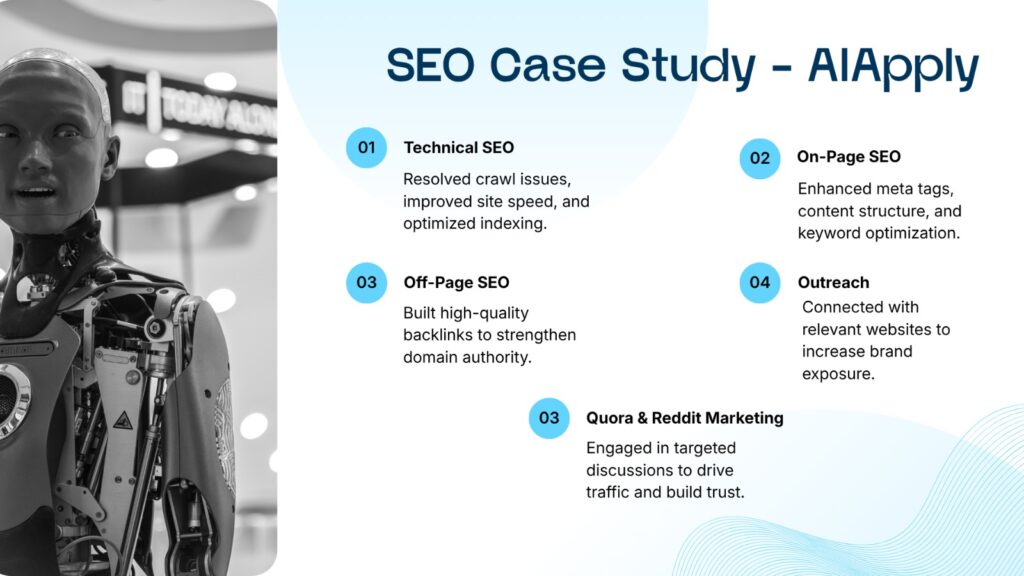
Technical improvements included:
- Resolving crawl issues
- Improving indexing efficiency
- Optimizing site performance
- Strengthening overall technical health
On-Page SEO
Content and page-level improvements included:
- Meta title optimization
- Content restructuring
- Keyword targeting
- Search intent alignment
- Internal linking improvements
Authority Building
The campaign also included:
- Strategic outreach
- High-quality backlink acquisition
- Brand visibility improvements
- Trust-building initiatives
Community Engagement
Additional efforts included participation across relevant communities through platforms such as Reddit and Quora to strengthen visibility and audience engagement.
Results Achieved
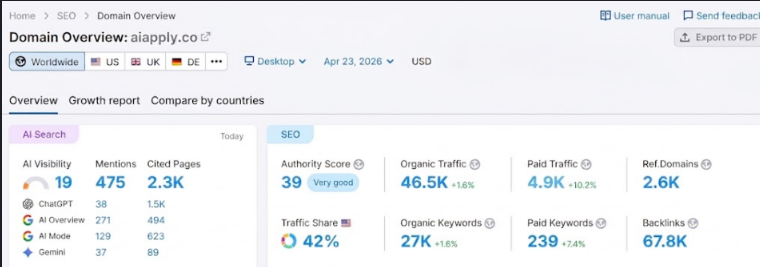
The campaign generated strong improvements across several key SEO metrics.
| Metric | Result |
|---|---|
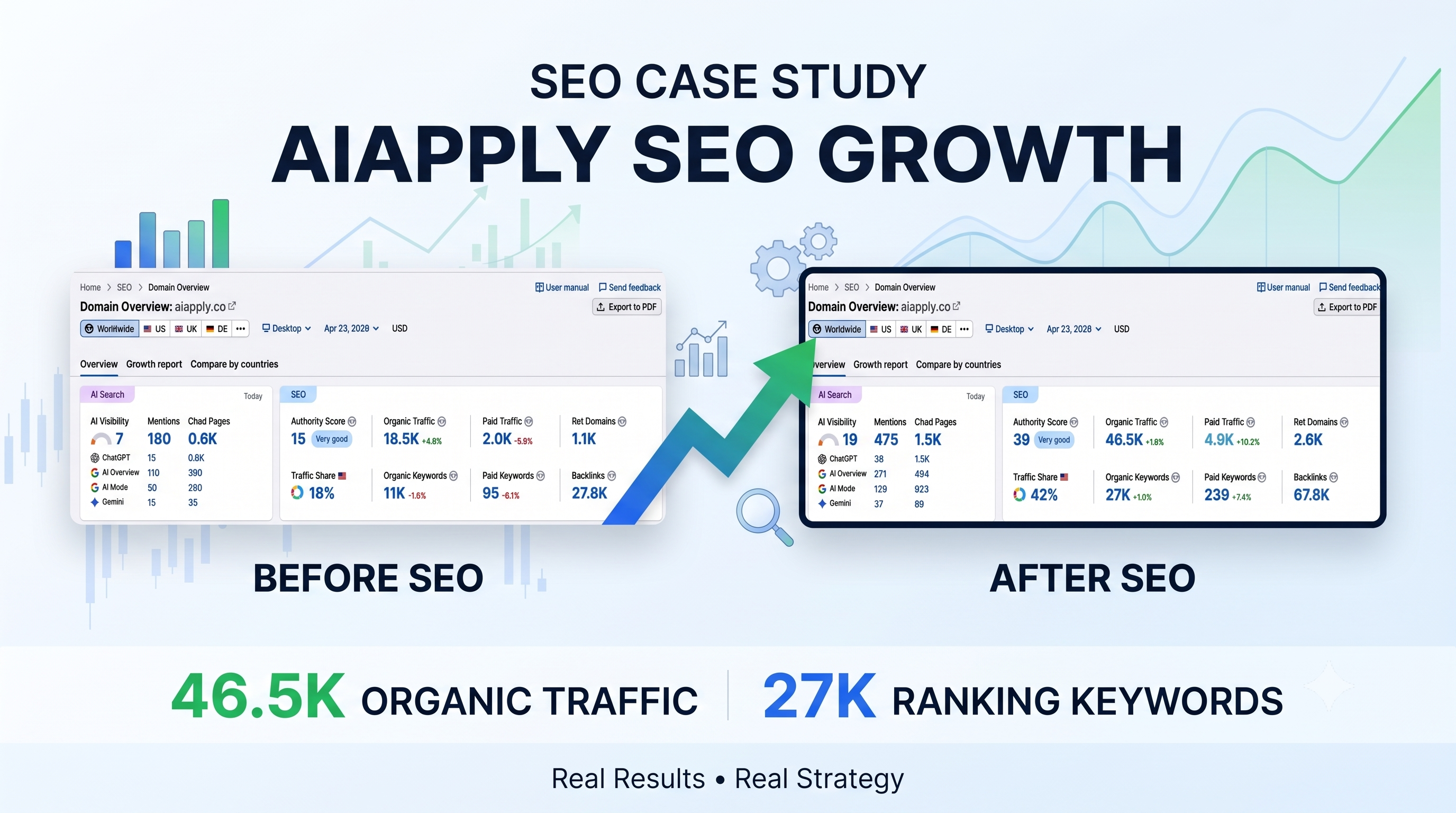
| Organic Traffic | 46.5K |
| Organic Keywords | 27K |
| Referring Domains | 2.6K |
| Backlinks | 67.8K |
| Authority Score | 39 |
| AI Mentions | 475 |
Key Takeaways
Several lessons emerged from this campaign:
- Technical SEO remains essential.
- Search intent matters more than keyword stuffing.
- Internal linking significantly improves content discoverability.
- Authority building contributes to sustainable ranking growth.
- Consistency often outperforms short-term SEO tactics.
The project reinforced a simple truth:
SEO success rarely comes from one tactic. It comes from combining technical optimization, content quality, authority building, and user-focused improvements over time.
SEO Case Study #2: Fitness Industry Growth
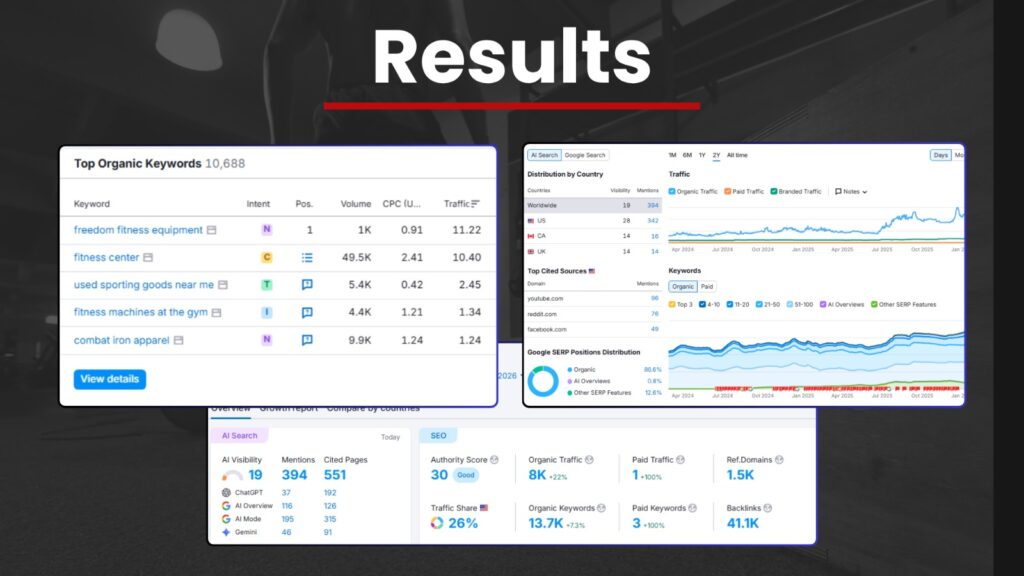
The second project involved a fitness-related website operating within a competitive market.
The goal was to improve visibility across informational and commercial search queries while strengthening topical authority.
The SEO strategy focused on improving content quality, strengthening keyword targeting, and creating a better overall user experience.
SEO Strategy Implemented
The campaign included:
- Content optimization
- Internal linking improvements
- Keyword clustering
- Technical SEO enhancements
- Authority-building initiatives
A major focus was identifying content gaps and creating pages that better matched user search intent.
Results Achieved
The website experienced strong growth in ranking keywords, search visibility, and organic traffic.
Some notable improvements included:
- Increased ranking keyword coverage
- Improved organic traffic
- Stronger domain authority signals
- Better visibility across competitive search terms
Key Takeaways
The fitness industry is highly competitive, but the campaign demonstrated that websites can still grow when content quality and user intent are prioritized.
Key lessons included:
- Topical authority matters.
- Consistent content optimization creates compounding results.
- Internal linking improves overall site performance.
- Search intent alignment increases ranking opportunities.
SEO Case Study #3: Content Website Growth

The third project involved a content-focused website that relied heavily on organic search traffic.
The challenge was improving visibility while maintaining content quality and providing a better user experience.
SEO Strategy Implemented
The campaign focused on:
- Content refreshes
- Search intent optimization
- Internal linking
- Technical SEO improvements
- Authority building
Rather than creating large amounts of new content, much of the growth came from improving existing pages and strengthening content relevance.
Results Achieved
The website experienced significant improvements in:
- Organic visibility
- Ranking keywords
- Search traffic
- Overall authority
The campaign reinforced the value of updating and optimizing existing content instead of focusing exclusively on publishing new pages.
Key Takeaways
Several important lessons emerged:
- Existing content often contains untapped ranking opportunities.
- Internal linking remains one of the most underutilized SEO strategies.
- Search intent optimization can significantly improve rankings.
- Content quality continues to play a major role in long-term SEO success.
Common Lessons Learned From SEO Case Studies
After working on projects across different industries, several patterns consistently appeared.
Content Quality Still Wins
Google continues rewarding content that provides value to users.
The most successful pages are not necessarily the longest. They are the pages that best answer user questions and satisfy search intent.
Technical SEO Creates the Foundation
Without proper technical SEO, even excellent content can struggle to perform.
Important areas include:
- Site speed
- Mobile usability
- Crawlability
- Indexability
- Structured data
Businesses looking to improve SEO performance should ensure technical issues are identified and resolved regularly.
Internal Linking Is More Powerful Than Most People Realize
Strategic internal linking helps:
- Distribute authority
- Improve crawlability
- Strengthen topical relevance
- Increase user engagement
Many websites miss valuable opportunities simply because their content is poorly connected.
Authority Building Remains Essential
Backlinks are still important, but quality matters far more than quantity.
Successful campaigns focus on earning relevant, trustworthy links rather than chasing low-quality backlinks.
Future of SEO Case Studies
The SEO industry continues evolving rapidly.
Modern case studies increasingly highlight:
- AI-assisted keyword research
- Content optimization workflows
- Search intent analysis
- Technical SEO automation
- Entity optimization
- User experience improvements
Many marketers are also adopting AI-powered solutions to improve efficiency and streamline content production.
Platforms that support AI marketing workflows can help businesses manage research, planning, and content creation more effectively.
However, successful SEO will continue to require human expertise, strategic thinking, and a deep understanding of user behavior.
SEO Case Studies FAQs
What is an SEO case study?
An SEO case study is a detailed analysis of an SEO campaign that explains the challenges, strategies, implementation process, and measurable results achieved.
Why are SEO case studies important?
SEO case studies provide real-world examples that help businesses understand which optimization strategies generate rankings, traffic, and visibility.
What should an SEO case study include?
A strong SEO case study should include:
- Objectives
- Challenges
- SEO strategy
- Implementation process
- Results
- Lessons learned
How long does it take to see SEO results?
Most websites begin seeing meaningful SEO improvements within three to six months, although results vary depending on competition, industry, and website authority.
Are SEO case studies useful for small businesses?
Yes. Small businesses can learn practical strategies from SEO case studies and apply proven techniques to improve local visibility, traffic, and lead generation.
Final Thoughts
SEO case studies provide some of the most valuable insights available in digital marketing because they are based on real-world implementation rather than theory.
The examples shared in this article demonstrate that successful SEO campaigns are built through a combination of technical optimization, content quality, authority building, internal linking, and consistent execution.
Whether you’re running an AI website, a fitness business, a content platform, or a local company, studying successful campaigns can help you make better decisions and avoid common mistakes.
If you’re looking to better understand digital marketing fundamentals, read our guide on How to Start Digital Marketing.
At NS Digi, we continue to implement data-driven SEO strategies that help businesses improve rankings, increase organic traffic, and strengthen long-term online visibility.
About the Author

Sumit Rana is a digital marketing professional with over 9 years of experience in SEO, content marketing, and online business growth.
He has worked on projects across multiple industries, helping businesses improve search visibility, increase organic traffic, and build sustainable long-term growth through proven SEO strategies.
His expertise includes technical SEO, content optimization, local SEO, authority building, AI-assisted marketing workflows, and search visibility growth.