
Artificial intelligence is no longer a futuristic concept—it is becoming an essential part of modern marketing. Today, AI tools for marketing help businesses automate repetitive tasks, understand customer behavior, create better content, improve SEO, optimize advertising campaigns, and make data-driven decisions faster than ever before.
Whether you are a startup, small business owner, marketing agency, or enterprise brand, using the right AI marketing tools can significantly improve productivity while reducing manual effort. Instead of spending hours on research, content creation, reporting, or campaign optimization, marketers can focus more on strategy and business growth.
From content writing and email marketing to SEO, paid advertising, customer support, and analytics, artificial intelligence is transforming nearly every area of digital marketing. Businesses that adopt AI strategically are often able to work faster, personalize customer experiences, and achieve better marketing results.
In this guide, you’ll learn what AI tools for marketing are, how they work, their benefits, the different types available, and how to choose the right tools for your business.
What Are AI Tools for Marketing?
AI tools for marketing are software platforms that use artificial intelligence, machine learning, and natural language processing (NLP) to help businesses automate and improve marketing activities.
These tools analyze large amounts of data, identify patterns, generate content, predict customer behavior, and recommend marketing strategies based on real-time insights.
Instead of replacing marketers, AI acts as a smart assistant that improves efficiency while helping teams make more informed decisions.
Some common marketing tasks AI can assist with include:
- Content writing
- Keyword research
- SEO optimization
- Email marketing
- Social media management
- Ad campaign optimization
- Customer support chatbots
- Marketing analytics
- Lead scoring
- Audience segmentation
Businesses of every size now use AI to improve productivity while delivering better customer experiences.
Why Businesses Are Investing in AI Tools for Marketing
Marketing has become increasingly competitive.
Customers expect personalized experiences, quick responses, and valuable content across multiple platforms.
Managing everything manually is becoming almost impossible.
This is why businesses are adopting AI marketing tools.
Save Valuable Time
One of the biggest advantages of AI is automation.
Instead of manually creating reports, writing social media captions, scheduling posts, or researching keywords, AI tools complete these repetitive tasks within minutes.
Marketing teams can then focus on planning campaigns, improving customer relationships, and creating stronger business strategies.
Improve Decision Making
Good marketing depends on good data.
AI analyzes customer behavior much faster than humans.
It helps marketers understand:
- Which campaigns perform best
- Which keywords generate traffic
- Which audience converts better
- Which content attracts more engagement
This allows businesses to make decisions based on real data rather than assumptions.
Deliver Better Customer Experiences
Today’s customers expect personalized recommendations.
AI makes personalization possible by analyzing browsing history, purchase behavior, interests, and engagement patterns.
Examples include:
- Personalized email campaigns
- Product recommendations
- Customized landing pages
- Dynamic website content
- AI-powered chatbots
Better personalization usually leads to higher engagement and improved conversion rates.
Increase Marketing ROI
AI helps marketers spend budgets more efficiently.
Instead of running broad advertising campaigns, AI identifies the audience most likely to convert.
It can automatically optimize:
- Ad targeting
- Bidding strategies
- Campaign budgets
- Audience segments
This reduces wasted advertising spend while improving overall return on investment.
Different Types of AI Tools for Marketing
Artificial intelligence supports almost every area of digital marketing.
Understanding the different categories helps businesses choose the right solutions.
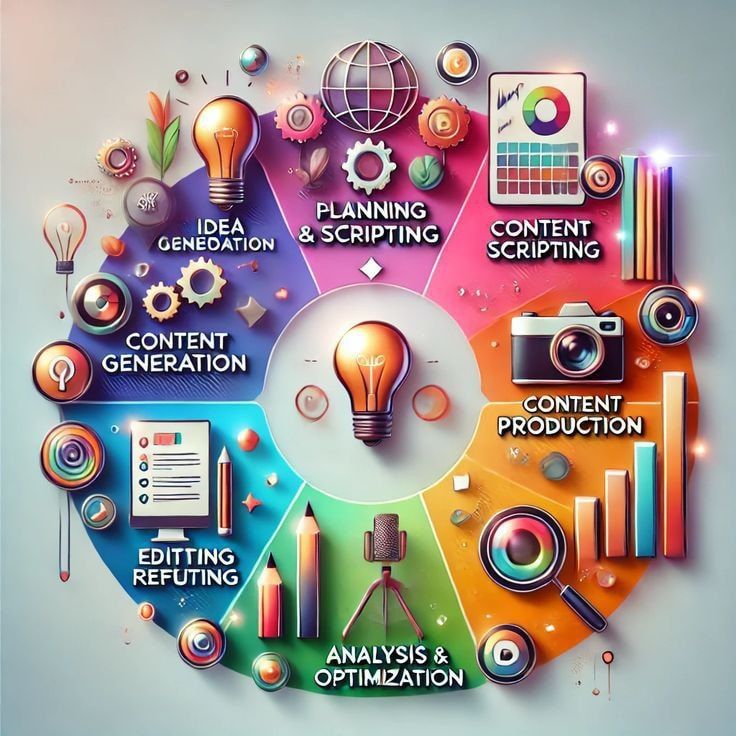
AI Content Creation Tools
Content remains one of the most important parts of digital marketing.
AI content tools help marketers generate:
- Blog outlines
- Product descriptions
- Landing pages
- Ad copy
- Email campaigns
- Social media captions
Instead of starting from scratch, marketers can use AI-generated drafts and refine them according to their brand voice. Many businesses also combine AI with professional content writing services to ensure every article is accurate, engaging, and optimized for search engines.
This speeds up content production without sacrificing quality.
AI SEO Tools
SEO requires continuous optimization.
AI-powered SEO platforms simplify tasks such as:
- Keyword research
- Search intent analysis
- Content optimization
- Competitor research
- Technical SEO audits
- Internal linking recommendations
Many businesses combine AI with specialized AI tools for SEO to improve search visibility, optimize content, and streamline keyword research more efficiently.
AI Social Media Marketing Tools
Managing multiple social platforms takes time.
AI social media tools can help marketers:
- Generate captions
- Schedule posts
- Suggest hashtags
- Analyze engagement
- Monitor audience sentiment
- Identify trending topics
These tools help maintain consistency while reducing manual workload.
AI Email Marketing Tools
Email marketing continues to deliver one of the highest returns on investment.
AI improves email campaigns by:
- Writing better subject lines
- Personalizing email content
- Predicting send times
- Segmenting subscribers
- Optimizing campaigns automatically
This leads to higher open rates and improved customer engagement.
AI Analytics and Reporting Tools
Marketing generates enormous amounts of data.
AI analytics platforms simplify complex information and present clear insights.
Businesses can easily track:
- Website traffic
- Customer journeys
- Campaign performance
- Conversion rates
- Lead quality
- Revenue attribution
This allows marketers to continuously improve their strategies.
Best AI Tools for Marketing in 2026
Choosing the right AI platform depends on your business goals, team size, and marketing requirements.
Here’s a comparison of some of the most popular AI marketing tools available today.
| Tool | Best For | Ideal Users |
|---|---|---|
| ChatGPT | Content creation | Bloggers & marketers |
| Make AI Now | Workflow automation | Agencies & businesses |
| Jasper AI | Copywriting | Marketing teams |
| Surfer SEO | SEO optimization | SEO professionals |
| Canva AI | Visual content | Social media managers |
| Grammarly AI | Content editing | Writers & businesses |
| HubSpot AI | CRM & automation | Sales & marketing teams |
Each platform solves different marketing challenges, so selecting the right combination is often more effective than relying on a single tool.
How to Choose the Right AI Tools for Marketing
Not every AI platform is suitable for every business.
Before investing in any software, ask yourself:
- What marketing tasks consume the most time?
- Do we need content creation or automation?
- Will multiple team members use the platform?
- Does it integrate with our existing tools?
- Can it scale as the business grows?
- Does it provide measurable ROI?
Answering these questions helps businesses avoid unnecessary software expenses while choosing tools that genuinely improve productivity.
Real Example: How AI Improves Everyday Marketing
Imagine you’re managing a digital marketing agency with multiple clients.
Instead of manually creating blog outlines, researching keywords, writing social media captions, designing visuals, scheduling posts, and preparing reports separately, AI can streamline much of this workflow.
For example, your team can use AI to generate initial content ideas, identify relevant keywords, organize content calendars, optimize blog drafts, and summarize campaign performance. Rather than replacing human expertise, AI supports faster execution and gives marketers more time to focus on strategy, creativity, and client communication.
Businesses that combine AI with human editing and quality control often achieve more consistent results while saving significant time on repetitive tasks.
Real Case Study: How AI Improved Marketing Performance
Artificial intelligence is most valuable when it’s applied to real marketing challenges rather than just theoretical concepts.
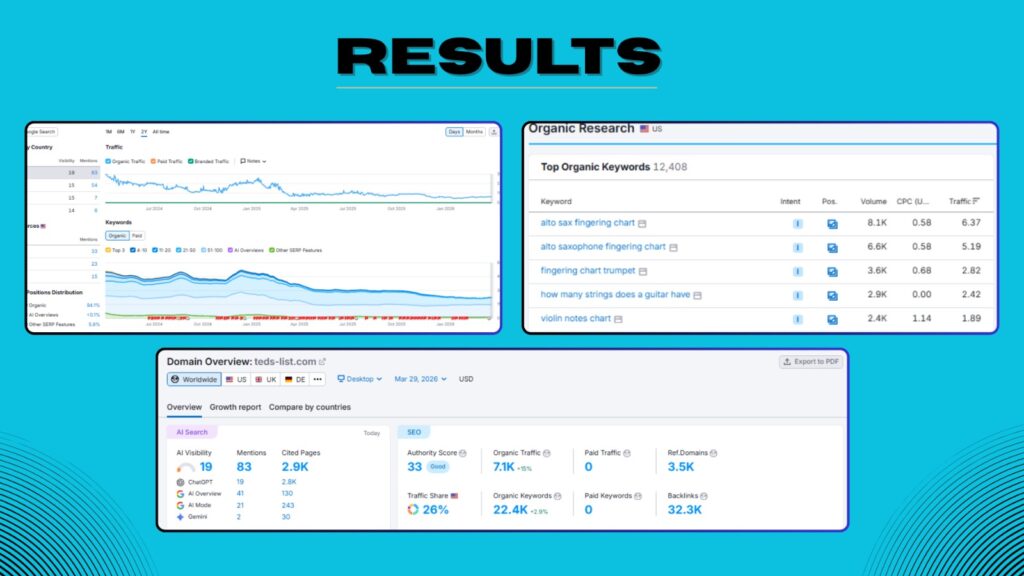
In one of our digital marketing projects, we integrated AI into multiple stages of the marketing workflow—including keyword research, content planning, SEO optimization, and performance analysis.
Instead of relying solely on manual research, AI helped us organize data faster, identify content opportunities, and streamline repetitive tasks. This allowed our team to spend more time refining strategy, improving content quality, and focusing on business goals.
While AI supported the workflow, every piece of content, optimization decision, and campaign strategy was still reviewed by experienced marketers. This combination of automation and human expertise helped improve efficiency without compromising quality.
Results Achieved
- Improved keyword visibility across multiple target keywords
- Better content planning and publishing consistency
- Faster marketing workflow
- Improved website performance through continuous optimization
- Better overall SEO and content management
Common Mistakes Businesses Make When Using AI Tools for Marketing
Artificial intelligence can improve marketing performance, but only when used correctly.
Many businesses expect AI to replace marketing teams completely, which often leads to disappointing results.
Here are some common mistakes to avoid.
Depending Entirely on AI
AI can generate ideas, outlines, reports, and recommendations.
However, businesses should always review AI-generated content before publishing.
Human expertise is still essential for:
- Brand voice
- Fact-checking
- Creativity
- Storytelling
- Strategic decision-making
The best results come from combining AI with human experience.
Using Too Many AI Tools
Many marketers subscribe to multiple AI platforms that perform similar functions.
Instead, choose a smaller set of tools that integrate well with your existing workflow.
This reduces costs while improving efficiency.
Ignoring SEO Best Practices
AI-generated content should always be optimized for search engines.
This includes:
- Proper heading structure
- Internal linking
- Helpful information
- Search intent optimization
- Original insights
- EEAT principles
Businesses combining AI with strong SEO practices often achieve better long-term rankings. Combining AI with the best SEO optimization tools helps marketers monitor rankings, analyze competitors, and improve overall website performance.
How AI Is Changing the Future of Marketing

Artificial intelligence is evolving rapidly.
The next generation of AI marketing platforms will go beyond content generation and automation.
Future AI tools will help businesses:
- Predict customer behavior more accurately
- Automate marketing campaigns intelligently
- Improve voice search optimization
- Personalize every customer interaction
- Generate performance reports automatically
- Analyze competitors in real time
- Recommend content topics based on search demand
Businesses that adopt AI strategically today will be better prepared for tomorrow’s digital marketing landscape.
AI Workflow Automation Is Becoming the New Standard
Marketing teams no longer use AI only for writing content.
Many businesses now rely on AI workflow automation platforms to organize content planning, streamline repetitive marketing tasks, improve collaboration, and increase overall productivity.
How to Get the Best Results from AI Tools for Marketing
If you are just starting with AI marketing, focus on solving one problem at a time instead of trying to automate everything at once. Before implementing AI across multiple channels, it’s helpful to create a clear digital marketing plan that aligns with your business goals and target audience.
A practical workflow might look like this:
- Research customer questions and search intent.
- Use AI to generate ideas and outlines.
- Create high-quality content with human editing.
- Optimize pages for SEO.
- Publish consistently.
- Measure results using analytics.
- Improve campaigns based on performance data.
This approach keeps AI as a productivity tool while ensuring quality remains high.
Frequently Asked Questions
What are AI tools for marketing?
AI tools for marketing are software platforms that use artificial intelligence to automate tasks such as content creation, SEO, email marketing, analytics, advertising, and customer engagement.
Are AI marketing tools suitable for small businesses?
Yes. Many AI platforms offer affordable or free plans, making them suitable for startups, freelancers, and small businesses looking to improve productivity.
Can AI replace digital marketers?
No. AI can automate repetitive tasks and provide insights, but human creativity, strategy, and decision-making remain essential for successful marketing.
Which AI tool is best for content creation?
The best choice depends on your goals. Some tools focus on long-form content, while others specialize in copywriting, SEO optimization, or workflow automation.
Do AI tools help with SEO?
Yes. AI can assist with keyword research, content optimization, technical audits, competitor analysis, and performance monitoring. However, human review is still necessary for the best results.
Is AI marketing worth investing in?
For most businesses, yes. AI helps save time, improve campaign efficiency, and make data-driven marketing decisions, often leading to better long-term results.
Final Thoughts
AI tools for marketing are transforming the way businesses plan, create, and optimize their marketing strategies. From content creation and SEO to advertising, analytics, and customer engagement, artificial intelligence enables marketers to work more efficiently while delivering better experiences to their audiences.
The key to success isn’t replacing human expertise with AI—it’s using AI to handle repetitive tasks while marketers focus on creativity, strategy, and building meaningful customer relationships.
Businesses that combine the right AI tools with consistent optimization, quality content, and a long-term marketing strategy are more likely to stay competitive in the evolving digital landscape.
If you’re looking for practical digital marketing solutions backed by SEO expertise and data-driven strategies, explore the services available on the NS Digi homepage.
About the Author

Sumit Rana is a digital marketing professional with over 9 years of experience in SEO, content marketing, search visibility, and business growth strategies.
He has worked on SEO campaigns across AI, SaaS, local businesses, affiliate websites, and content publishing platforms. His expertise includes technical SEO audits, content optimization, authority building, local SEO, and AI-assisted marketing strategies.